
Corn crossed the Atlantic in the opposite direction from the route that FIERRO would later take. It was Christopher Columbus who first brought it to Spain upon his return from his first voyage in 1493, along with other seeds and curiosities from the “New World.” Spain thus became the gateway for corn into Europe, decades before the crop became known in the rest of the continent.
For much of the 16th century, corn was initially grown as a novelty plant in vegetable gardens and as fodder for livestock; its incorporation into the human diet was slower and varied by region. It truly took root as a staple food in the north of the Iberian Peninsula —Galicia, Asturias, Cantabria, and the Basque Country— areas with a humid climate similar to that of its place of origin, where, beginning in the 17th and 18th centuries, it partially replaced millet and rye in the traditional diet, giving rise to traditional breads such as borona or broa, and to dishes that endure today in the cuisine of northern Spain.
From there, its cultivation spread to other agricultural regions, adapting to different soils, climates, and uses: as animal feed in some areas, and as an ingredient in traditional dishes in others.
El maíz cruzó el Atlántico en sentido inverso al que después haría el propio recorrido de FIERRO. Fue Cristóbal Colón quien lo trajo por primera vez a España a su regreso del primer viaje, en 1493, junto con otras semillas y curiosidades del “Nuevo Mundo”. España se convirtió así en la puerta de entrada del maíz a Europa, décadas antes de que el cultivo se conociera en el resto del continente.
Durante buena parte del siglo XVI, el maíz se cultivó primero como planta de curiosidad en huertos y jardines, y como forraje para el ganado; su incorporación a la dieta humana fue más lenta y desigual según la región. Donde realmente arraigó como alimento cotidiano fue en el norte de la península —Galicia, Asturias, Cantabria, País Vasco—, zonas de clima húmedo similares al de su lugar de origen, donde desde los siglos XVII y XVIII sustituyó parcialmente al mijo y al centeno en la dieta popular, dando lugar a panes tradicionales como la borona o la broa, y a platos que perduran hoy en la cocina del norte de España.
Desde allí, el cultivo se fue extendiendo hacia otras regiones agrícolas, adaptándose a distintos suelos, climas y usos: como grano para consumo animal en unas zonas, como ingrediente de platos populares en otras.
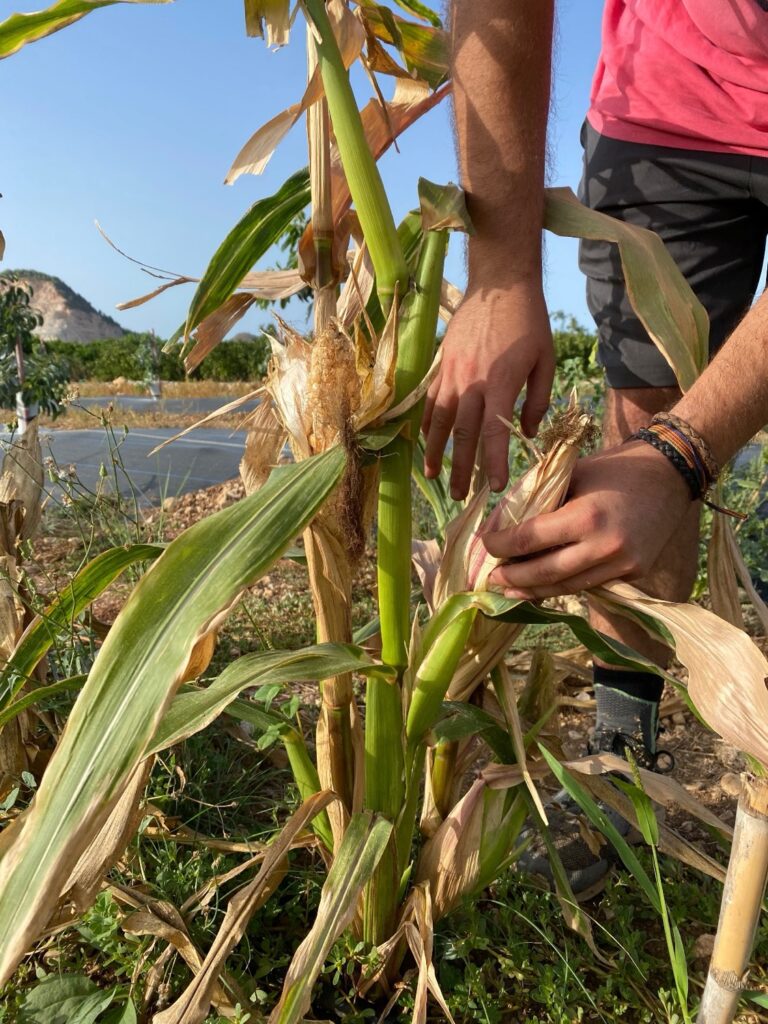
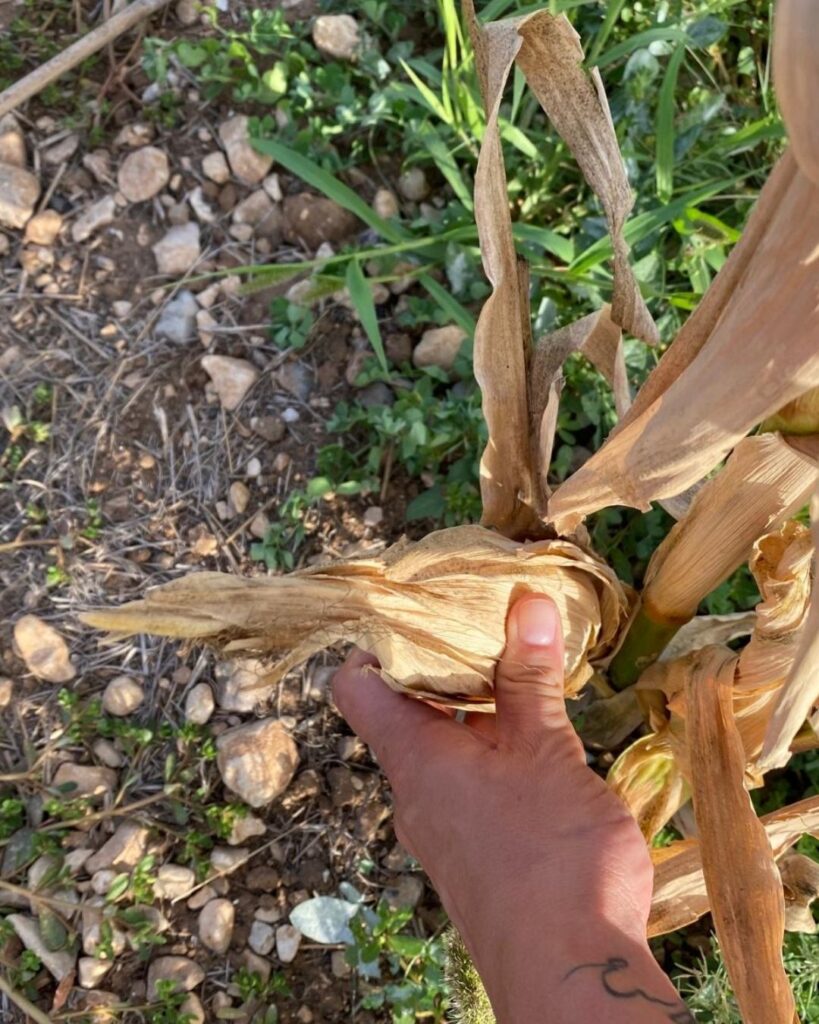
In the Mediterranean and Valencian agricultural regions, corn became integrated as just another crop within an agricultural system that was already well-established around rice, vegetables, and traditional irrigation, occupying a secondary but constant place in the region’s agricultural landscape.
So, when corn made its way into our kitchens in Valencia, it wasn’t arriving in a region that was completely unfamiliar with it: it was arriving in a land that, centuries earlier, had already welcomed it for the first time in Europe.
The circle was closing in an unexpected way: the very same grain that had left the Americas and entered Europe via Spain was now returning to us, in Valencia, imbued with a different history and a different flavor.
From the family hearth to the cast-iron table
Even before FIERRO existed, corn was already a staple in our kitchen.
When we arrived in Valencia, we discovered a completely different pantry. We learned to interpret a new landscape, get to know new producers, and understand the rhythm of a vegetable garden that speaks its own language. That’s when corn began to take on a different role in our kitchen.
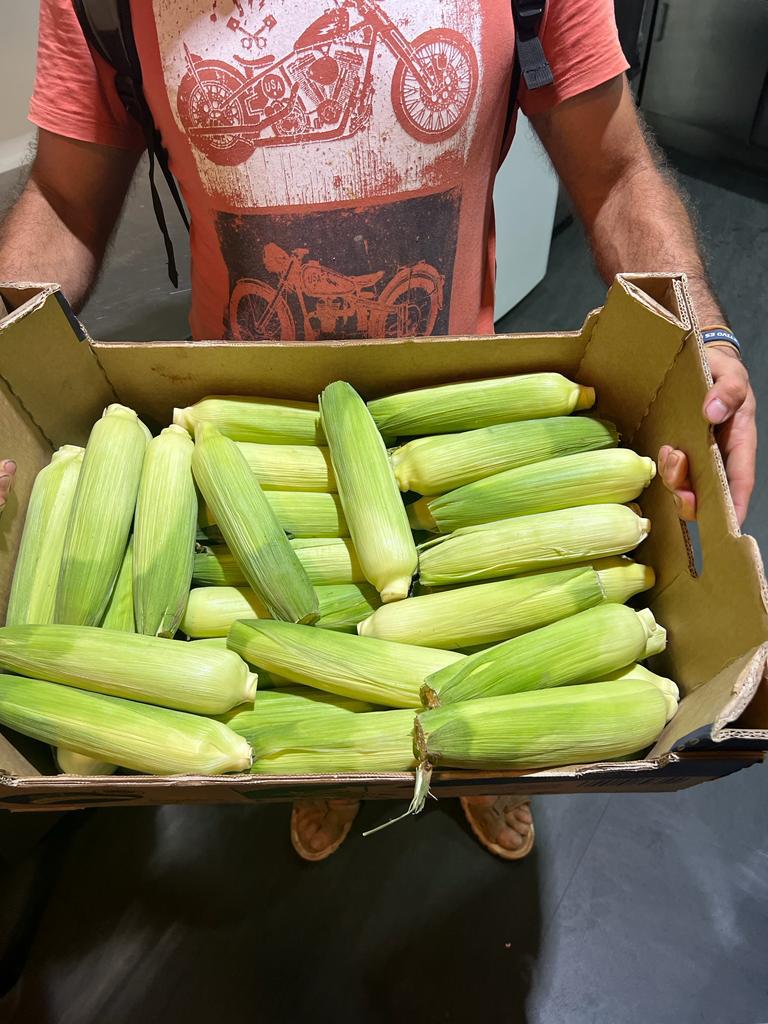
We weren’t looking to “bring a piece of Argentina” here, nor to recreate a recipe exactly as we remembered it. We were interested in something different: discovering what happens when an ingredient with such deep cultural significance finds a new home from which to continue evolving. Because identity doesn’t remain static. It changes with the people, with the land, and with the decisions we make every day in the kitchen. Looking to our origins has never meant staying there; only by understanding where we come from can we continue to imagine where we want to go.
Corn as a Language and a Bond
In *FIERRO*, corn appears as an echo of origin, like a thread linking two seemingly distant territories: the vastness of the Americas and the texture of the Mediterranean.
In Argentina, corn is food, ritual, and mother. It’s in childhood memories, in dishes cooked with care, and in the hands that shape history. At FIERRO, we bring it to the table as a living legacy: not as a foreign ingredient, but as a bridge to identity.
Identity and memory. It is reinterpreted and understood through a Mediterranean lens—from the ground we now walk on and the produce that grows near the sea. In this way, corn becomes an emotional guide, a way of expressing who we are, even thousands of kilometers away.
La historia continúa en El Maíz de FIERRO III: sabor, identidad y 11 años →